Forklift Safety Best Practices: Essential Guide for Workplace OSHA Compliance
Forklifts are indispensable in warehouses and industrial facilities, but they also pose serious hazards if not operated correctly. Each year, forklift accidents lead to dozens of fatalities and tens of thousands of injuries in U.S. workplaces. To prevent these incidents, businesses must prioritize forklift safety best practices at every level. This guide provides workplace forklift safety tips covering operator training, pre-shift inspections, load handling, vehicle movement, PPE, and equipment maintenance. By following these guidelines, your team can maintain safe forklift operation and ensure OSHA forklift compliance for a safer, more productive work environment.
Operator Training and Certification
The foundation of forklift safety is thorough operator training. OSHA regulations require that only trained and certified operators drive forklifts. Certification involves formal instruction, practical training, and an evaluation of performance. Training must be refreshed regularly to maintain compliance and safety standards.
Pre-Shift Inspections
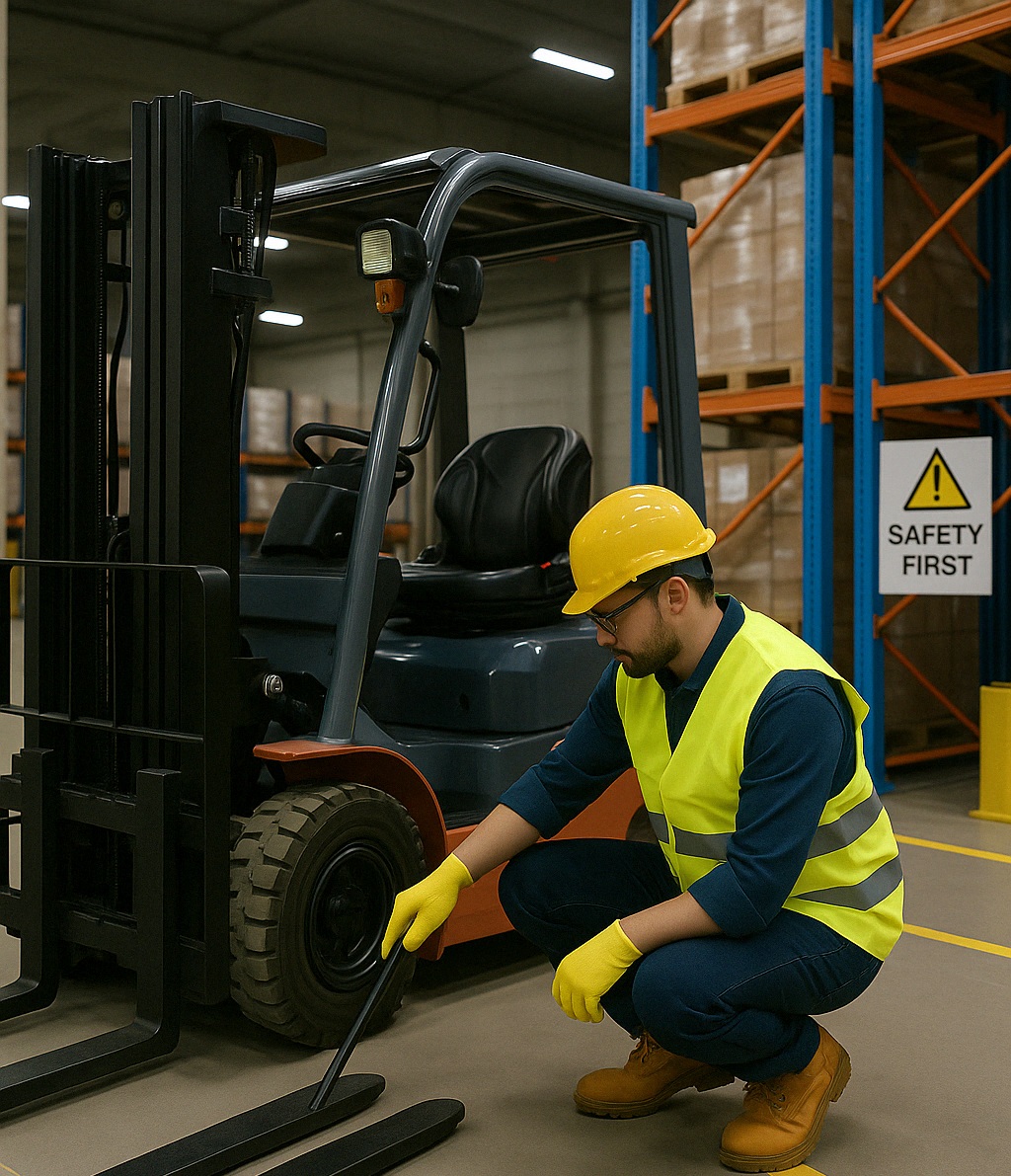
Using a daily forklift inspection checklist ensures forklifts are safe before each shift. Operators should inspect:
- Tires for wear and inflation
- Forks for cracks or damage
- Hydraulic and brake fluid levels
- Lights, alarms, and horns
- Brakes and steering controls
Any defects must be repaired before operating the forklift.
Safe Load Handling
- Know and respect the forklift's rated load capacity.
- Center loads properly on the forks.
- Secure unstable loads with straps or bindings.
- Drive in reverse if a load blocks forward visibility.
Following these steps prevents tip-overs and load spills.
Safe Forklift Operation and Movement
- Drive at safe speeds, especially on slippery floors.
- Slow down when turning and on ramps.
- Always wear a seatbelt.
- Yield to pedestrians and use horns at blind corners.
Consistent safe operation greatly reduces accident risk.
Personal Protective Equipment (PPE)
Operators should always wear:
- Hard hats
- Safety shoes with toe protection
- High-visibility vests
- Safety glasses (if required)
- Hearing protection (in noisy environments)
PPE enhances personal safety and workplace visibility.
Quality Maintenance and Parts
Regular maintenance and using high-quality or OEM-grade parts are critical for forklift safety. At Industrial Vehicle Specialties, we supply reliable aftermarket forklift parts that help extend equipment life and performance while ensuring safety standards are met.
Conclusion
A strong forklift safety program protects your team and improves operational efficiency. From proper operator training to equipment maintenance, safety requires daily attention.
For expert support and access to high-quality forklift parts, contact Industrial Vehicle Specialties today to keep your operations OSHA-compliant and accident-free.